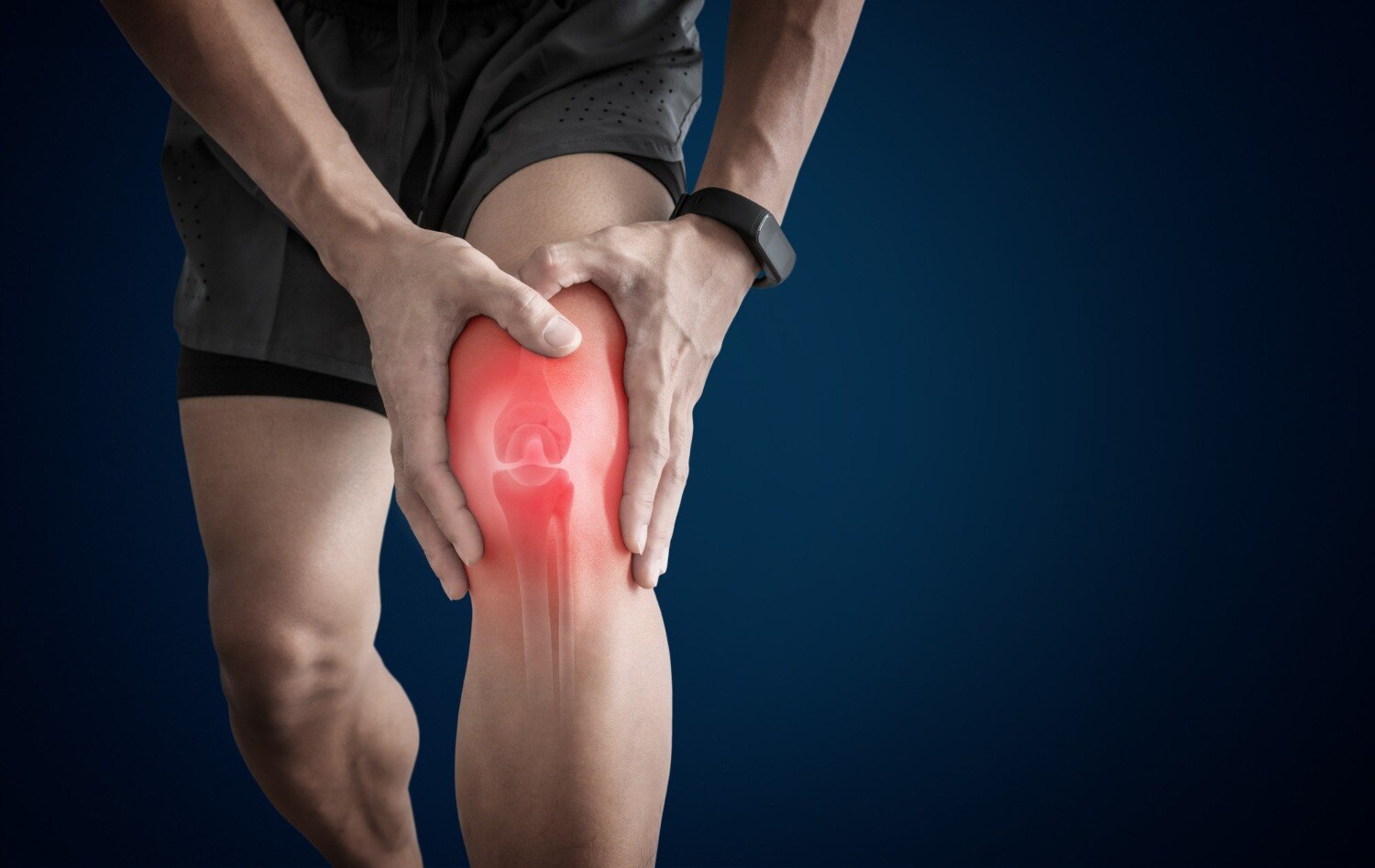
An anterior cruciate ligament injury can make the knee feel unstable, painful, or unreliable during walking, turning, running, and sports. The best physiotherapy treatment for an ACL injury is not a single exercise or machine-based therapy. It is a progressive rehabilitation programme designed around the severity of the injury, treatment decision, current symptoms, and functional goals.
At Dr Renuka's Physiotherapy Center in Vishrantwadi, ACL rehabilitation begins with a detailed assessment of knee movement, swelling, muscle strength, walking pattern, balance, and stability. This helps determine what the knee can safely tolerate at each stage.
What Does ACL Physiotherapy Aim to Achieve?
Whether the injury is managed conservatively or through ACL reconstruction surgery, physiotherapy generally focuses on:
- Reducing pain and swelling
- Restoring full knee extension and gradual knee bending
- Improving quadriceps and hamstring strength
- Correcting walking difficulties
- Rebuilding balance and joint control
- Preparing the knee for running, jumping, and direction changes
- Reducing the likelihood of reinjury
The rehabilitation plan should also address the hip, ankle, and core because knee control depends on the coordinated movement of the entire lower limb.
Early-Stage ACL Rehabilitation
During the initial stage, the knee may be swollen, stiff, and difficult to straighten. Treatment is usually centred on symptom control and safe movement.
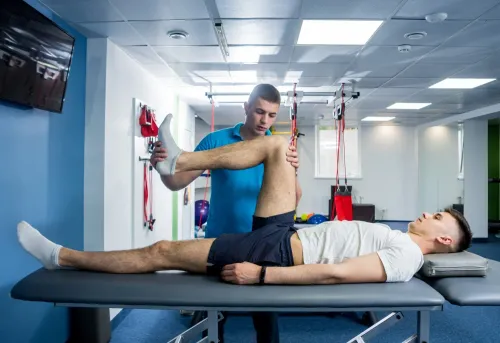
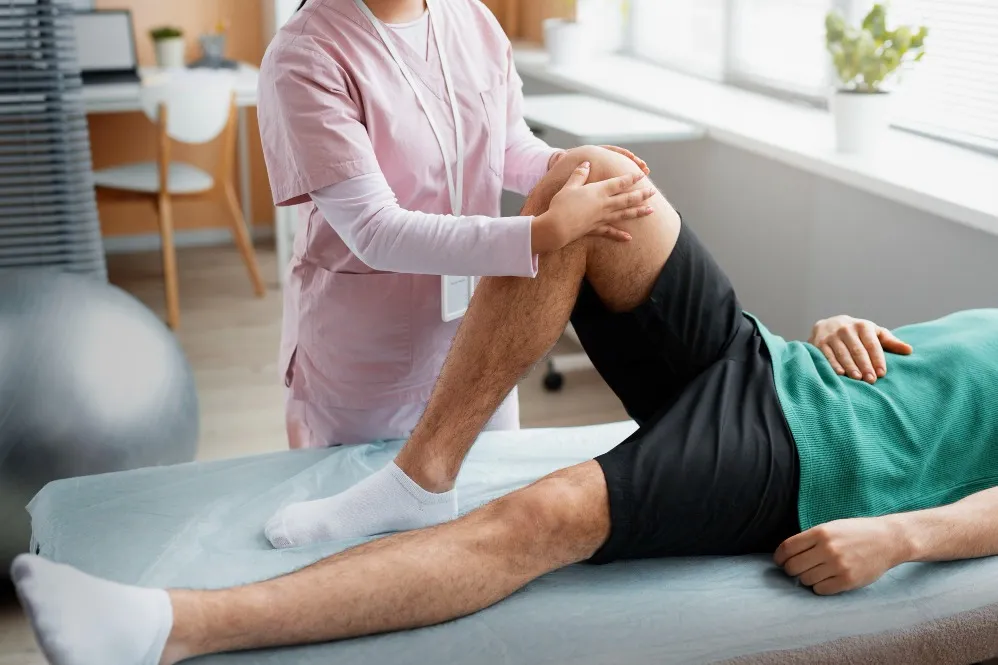
Common early interventions include gentle range-of-motion exercises, quadriceps activation, supported weight-bearing, swelling-management strategies, and gait training. Patients using crutches may also be taught how to walk and climb stairs safely.
Regaining knee extension is particularly important. A persistent inability to straighten the knee can affect walking mechanics and place unnecessary stress on other joints.
Strength and Stability Training
Once swelling is controlled and knee movement improves, rehabilitation progresses to strengthening. Exercises may target the quadriceps, hamstrings, gluteal muscles, calves, and core.
Depending on the patient’s condition, the programme may include:
- Supported squats
- Step-ups and controlled step-downs
- Bridge variations
- Resistance-band exercises
- Stationary cycling
- Single-leg balance activities
- Controlled lunges
- Progressive gym-based strengthening
Exercise quality matters more than completing a high number of repetitions. The knee should remain aligned, and movements should be performed without uncontrolled twisting or collapsing inward.
Returning to Running and Sports
Being pain-free does not automatically mean the knee is ready for sports. Running, jumping, and cutting movements require adequate strength, balance, confidence, and reaction control.
A physiotherapist may use functional measures such as single-leg squats, hop-based activities, landing assessment, strength comparisons, and sport-specific drills. Progression should be based on performance and knee response rather than time alone.
People in Pune who regularly play football, cricket, badminton, or other direction-changing sports may require additional agility and reaction training before returning to unrestricted participation.
Is Surgery Always Required?
Not every ACL injury is managed in the same way. Partial tears, activity level, associated meniscus damage, repeated instability, age, and sporting goals can influence the treatment decision. Some individuals function well with structured rehabilitation, while others may need reconstruction followed by post-operative physiotherapy.
A coordinated decision involving the patient, orthopaedic specialist, and physiotherapist is valuable. Physiotherapy may be required before surgery to reduce swelling and improve movement, as well as after surgery to restore function.
Successful ACL recovery takes patience and consistent progression. A personalised programme helps rebuild strength and confidence while preparing the knee for the demands of everyday life, work, or sport.
Keywords