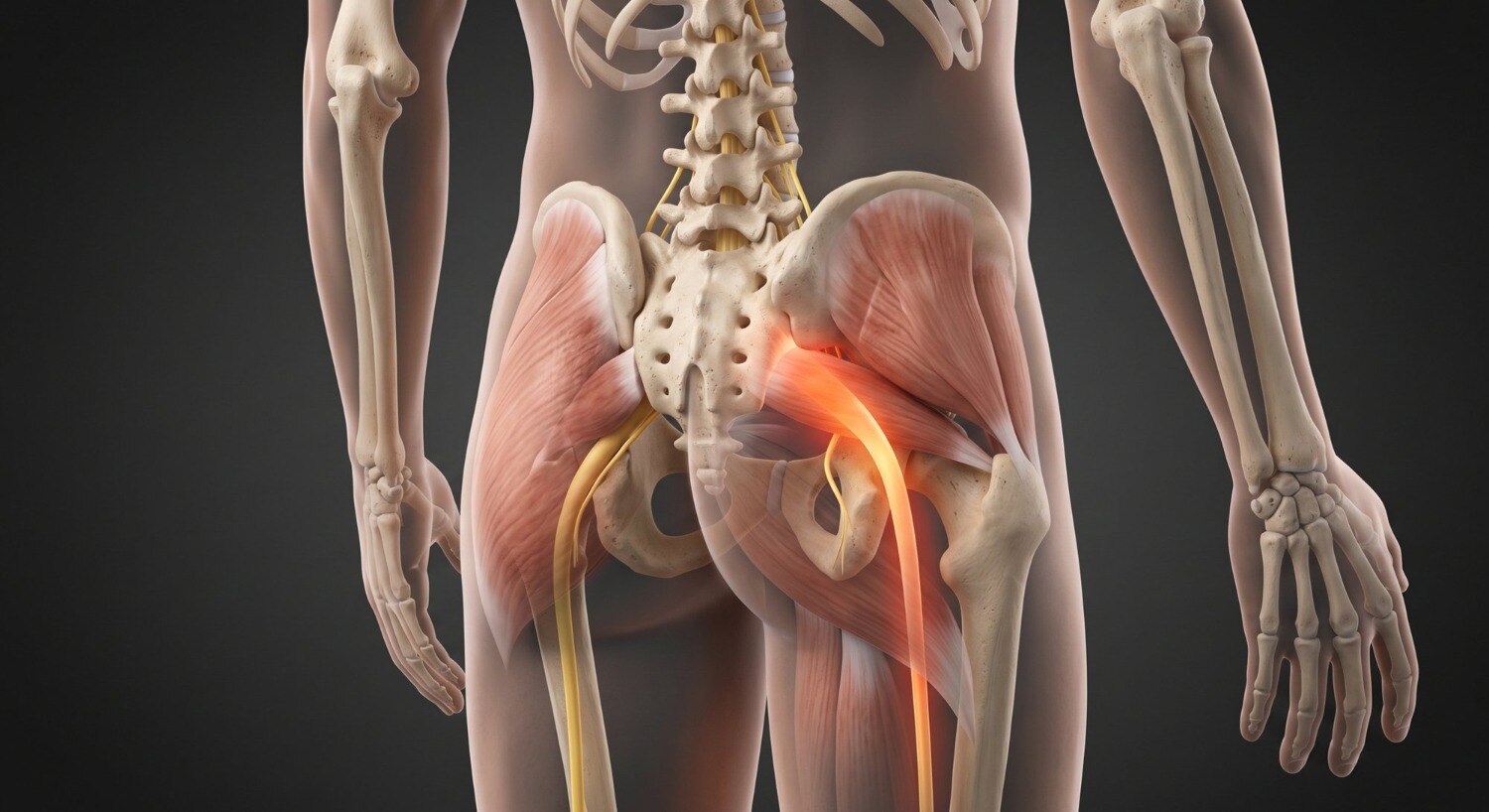

An ankle sprain is not always a simple ligament injury that can be managed with rest and pain relief. You need to recognise when an X-ray or urgent medical assessment comes first, then match the rehabilitation plan to the injury grade, location, symptoms, and demands of your sport or daily routine.
Key takeaways
- Seek urgent assessment for deformity, inability to bear weight, numbness, or severe swelling.
- Use protection, relative rest, compression, and elevation during the first 24 to 72 hours.
- Rehabilitation depends on whether the injury affects a ligament, bone, tendon, or cartilage.
- Return to sport only after strength, balance, hopping, and sport-specific movements are pain-free.
Is this a mild sprain, a fracture, or an injury needing urgent assessment?
Before choosing ankle sprain treatment in Goregaon Park, establish whether you need imaging or medical assessment rather than immediate exercise. Low pain alone does not prove a mild injury.
The Ottawa Ankle Rules advise ankle radiographs for tenderness at the posterior edge or tip of either malleolus, or inability to bear weight immediately and for four steps. Seek mid-foot radiographs for navicular or base-of-fifth-metatarsal tenderness with the same weight-bearing limitation.
| Injury pattern | Typical clues | Appropriate next step |
|---|---|---|
| Grade I lateral sprain | Mild tenderness, little swelling, stable ligaments, walking possible | Protected movement and progressive physiotherapy |
| Grade II lateral sprain | Partial ligament tear, bruising, swelling, painful or altered walking | Clinical assessment, support, and slower loading |
| Grade III lateral sprain | Complete tear, marked swelling, instability, inability to walk normally | Medical review; protection or short immobilisation may be needed |
| Fracture | Focal bone tenderness, major swelling, bruising, or weight-bearing failure | Radiographs and medical assessment |
| Tendon injury | Pain along the Achilles or peroneal tendons, weakness, or a snap | Examination before loading |
| High-ankle sprain | Pain above the ankle, painful squeeze or external rotation, weak push-off | Cautious assessment and possible imaging |
| Recurrent instability or dislocation | Repeated giving-way, a displaced joint, or obvious deformity | Specialist or urgent assessment |
Seek urgent care for visible deformity, an open wound, numbness, severe or rapidly increasing swelling, disproportionate pain, a cold or discoloured foot, calf swelling, or persistent inability to walk.
What should you do during the first 24 to 72 hours?
During the first 24 to 72 hours, protect the ankle without keeping it completely still. Use relative rest, walk only as tolerated, and stop if pain sharply increases or your gait worsens.
- Wear a lace-up ankle brace or use tape when walking; it limits painful movement while allowing safe loading.
- Apply comfortable compression with an elastic bandage, loosened if toes become numb, cold, or discoloured.
- Elevate the foot above heart level when resting to help control swelling.
- Use an ice pack for 10 to 15 minutes when it reduces pain, with cloth between the pack and skin.
- Move the ankle gently within a comfortable range several times daily; tolerable loading and early protected movement usually restore function better than prolonged immobilisation.
- Ask a clinician or pharmacist about pain medicine. Anti-inflammatory drugs require caution with stomach ulcers, kidney disease, anticoagulants, pregnancy, or other contraindications.
- Arrange medical review if swelling or pain increases, you cannot progress weight-bearing, the ankle repeatedly gives way, or you develop numbness, fever, or calf swelling.
Pain relief does not prove that the ligament has healed. Avoid aggressive massage, forceful stretching, and any treatment that provokes pain during this phase.
Most uncomplicated lateral sprains do not need immobilisation. A severe sprain can require immobilisation for up to about 10 days under clinical guidance. For mild ankle injury physiotherapy in Goregaon Park, seek assessment if progress stalls rather than repeating self-care indefinitely.
What happens in an ankle sprain physiotherapy assessment?
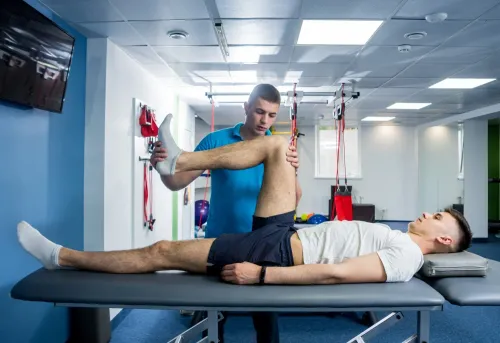
A useful first assessment establishes what was injured and the safest starting load before exercise begins. The physiotherapist should ask how the injury occurred: did the foot roll inward, or was the ankle forced upward and outward? They should also record:
- Exact pain location, swelling, bruising, weight-bearing ability, walking pattern, and gait.
- Ankle range of motion, ligament tenderness, and abnormal laxity.
- Calf and peroneal strength, including painful or weak push-off.
- Single-leg balance and control, when you can stand safely.
- Signs of a syndesmotic, or high-ankle, sprain: pain above the ankle, pain during external rotation or a squeeze test, and reduced push-off.
This process prevents a painful fracture or high-ankle injury from being treated like a routine lateral sprain. Bone tenderness at the malleolus, navicular, or base of the fifth metatarsal; deformity; numbness; or worsening neurological symptoms can lead to imaging or orthopaedic referral instead of exercise. Stalled progress also needs review.
For people seeking ankle sprain physiotherapy for Goregaon Park injuries, Dr Renukas Physiotherapy center can be useful when the goal is injury classification and a measured starting load, not merely massage. That distinction matters in ankle sprain treatment Goregaon Park patients choose after pain begins to settle but walking or balance remains abnormal.
Related service
all types of joint pain ₹600 we give holistic Treatment for spondylysis, neck pain Back pain, shoulder pain, tennis elbow, sciatica, knee pain, ankle sprain, sports... View service → |
How does rehabilitation change for different ankle injuries?
Rehabilitation follows the injury and the demands of your daily life, not a generic exercise sheet.
- Grade I sprain: Begin with pain-limited ankle movement and isometric activation. Progress to resisted dorsiflexion, plantarflexion, inversion, and eversion, then add calf raises and single-leg balance. This is the usual focus of mild ankle injury physiotherapy Goregaon Park patients seek.
- Grade II sprain: Load the ankle more slowly while controlling swelling and checking walking quality. The clinician monitors ligament stability and reduces or pauses exercises when pain, limping, or swelling increases.
- Grade III sprain or an immobilised ankle: Coordinate rehabilitation with medical care. After protection ends, restore range of motion first, rebuild strength gradually, and use later functional testing before higher-impact activity.
- High-ankle sprain: Progress more cautiously because push-off and rotation can remain painful longer. Pain above the ankle, a painful squeeze or external-rotation test, and poor push-off require reassessment rather than routine lateral-sprain exercises.
- Sports-related sprain: Advance from single-leg balance to unstable-surface control, hopping, landing, running, cutting, and sport-specific drills. Sports rehabilitation Goregaon Park should test the movements and confidence your sport requires, not just walking comfort.
- Recurrent sprain: Add neuromuscular and proprioceptive training for uneven ground, stairs, and direction changes. A brace or tape supports recovery, but neither replaces strength, balance, or controlled loading. Hands-on treatment can ease pain or improve movement temporarily; active rehabilitation restores control.
When are you ready to return to work, running, or sport?
A calendar date and comfortable walking do not prove that your ankle is ready for work, running, or sport. Sports rehabilitation Goregaon Park should use task performance, not time alone. Seek specialist review for deformity, suspected syndesmotic injury, neurological symptoms, worsening pain or swelling, recurrent giving-way, fever, calf swelling, or failure to progress.
For ankle sprain treatment Goregaon Park, reassess when recovery stalls rather than repeating the same routine.
| Option | What it means | Limitation |
|---|---|---|
| Prolonged rest | Reduces activity while symptoms settle | Can leave weakness and instability |
| Ankle brace | Limits excessive ankle movement and reduces reinjury risk | Does not restore strength or movement control |
| Imaging | Identifies selected fractures or complex injuries | Does not replace rehabilitation |
| Orthopaedic review | Assesses serious, unusual, or non-healing injuries | Does not replace progressive exercise when rehabilitation is appropriate |
Before discharge or unrestricted sport, complete this reassessment:
- Measure dorsiflexion plus plantarflexion, inversion, and eversion, comparing both ankles.
- Test calf and peroneal strength, including repeated single-leg calf raises.
- Check single-leg balance on firm and changing surfaces.
- Observe hopping, landing control, running, and change-of-direction tolerance.
- Rehearse the movements your job or sport demands, and confirm confidence without protective hesitation.
Progressive loading matters because walking can feel normal while single-leg control remains poor. A safe return means the ankle handles the required tasks without rising pain, swelling, or giving-way afterward.
Frequently asked questions
How can you tell a mild ankle sprain from a fracture or urgent injury?
A mild sprain usually allows some weight-bearing with manageable pain. Seek medical assessment for deformity, severe or rapidly increasing swelling, numbness, cold or discoloured toes, an open wound, or inability to take four steps. Imaging is also important when bone tenderness is present around the ankle bones or at the base of the fifth metatarsal.
What should you do during the first 24 to 72 hours after an ankle injury?
Protect the ankle, reduce activities that increase pain, use compression if it does not cause numbness or colour change, and elevate the leg. Apply a cold pack wrapped in cloth for up to 15 to 20 minutes at a time. Avoid aggressive stretching, massage, heat, and running during this period.
What happens during an ankle sprain physiotherapy assessment?
The physiotherapist reviews how the injury happened, checks swelling and bruising, tests walking, ankle movement, strength, balance, and ligament or tendon tenderness, and screens for signs that need medical referral or imaging. The findings guide a staged rehabilitation plan.
When can you return to work, running, or sport after an ankle sprain?
Return when walking is comfortable, ankle movement is nearly symmetrical, strength and balance are restored, and hopping or sport-specific drills do not cause pain or increased swelling. Desk work may resume earlier than running, while field and court sports require cutting, jumping, and landing tests.
Keywords