A “slip disc” can mean a disc bulge, protrusion, or herniation, but the scan alone does not show whether physiotherapy is suitable or urgent medical care is needed. You will learn how to screen warning signs, compare physiotherapy providers, and judge readiness for returning to the gym, running, work, and sport.
Key takeaways
- Seek urgent care for new bladder or bowel changes, saddle numbness, or rapidly worsening leg weakness.
- Choose an assessment that checks strength, sensation, reflexes, walking, and movements—not only your MRI.
- Progress from symptom control to strength, lifting, running, and sport-specific drills.
- Return to training when leg symptoms are settled and you can complete sport movements without worsening pain.
What a Slip Disc Means—and When Physiotherapy Is Not the First Step
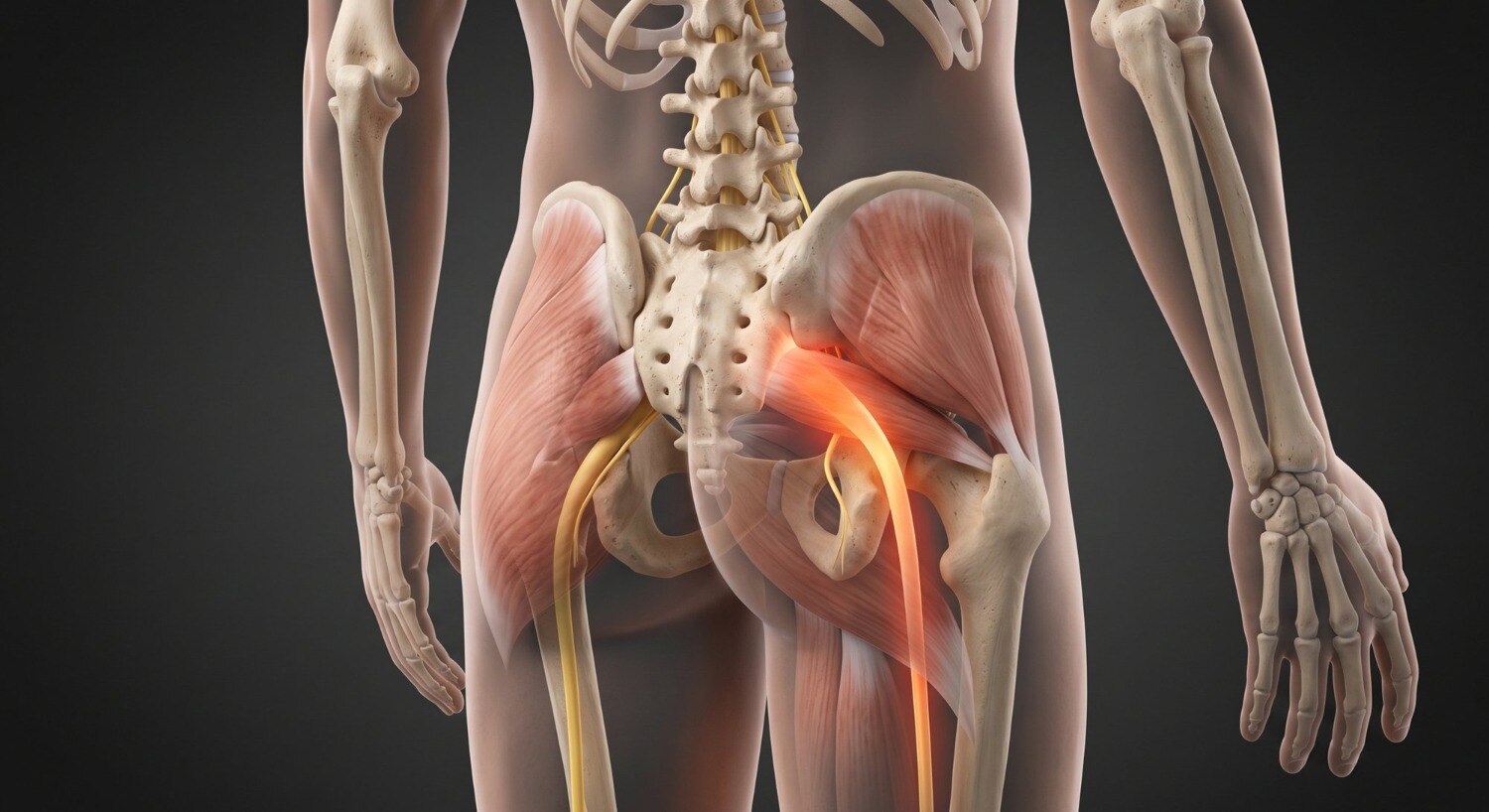
“Slip disc” usually means a lumbar disc bulge, protrusion, or herniation. If the disc irritates a nerve root, pain can travel into the buttock or leg, with tingling, numbness, or weakness known as sciatica. The scan does not prove that the disc causes every symptom.
Use this triage procedure before searching for the best physiotherapy for slip disc:
1. Seek urgent medical assessment for new difficulty starting or controlling urination, loss of bowel control, numbness around the genitals or inner thighs, or severe or rapidly worsening weakness in both legs. These signs can indicate cauda equina syndrome, so do not begin exercises first.
2. Treat stable back pain with pain in one leg, manageable walking, and no worsening loss of strength or sensation as a possible outpatient physiotherapy case—not a confirmed diagnosis. A clinician still needs to examine you.
3. Ask for a neurological examination covering leg strength, sensation, reflexes, nerve-tension tests, walking, and repeated lumbar movements. Record whether symptoms are improving, stable, or worsening.
4. Explain your lifting demands, sitting posture, running or gym training, and walking tolerance. These details shape safe treatment and reveal whether your function is declining.
MRI is not automatically necessary. NICE advises against routine imaging in non-specialist settings when the result will not change treatment; an MRI becomes relevant when examination findings and the clinical decision require it.
What the First Assessment Should Check Before Treatment Begins
Before choosing physiotherapy, MRI, or specialist referral, the clinician should establish whether symptoms are stable and mechanically manageable or indicate worsening nerve compromise.
1. Ask where the pain travels, whether coughing or sneezing changes it, and whether numbness, tingling, or weakness affects one or both legs. Record symptom duration, previous episodes, medication, injury, and relevant medical conditions.
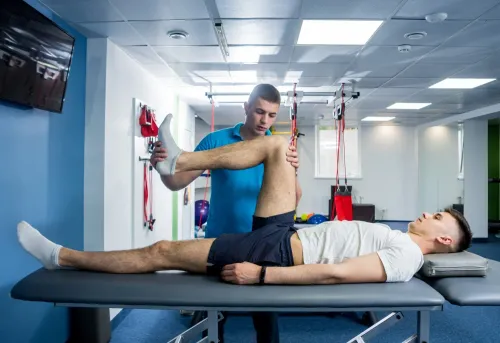
2. Perform a neurological screen: test hip, knee, ankle, and big-toe strength; check knee and ankle reflexes; map sensation; assess walking, heel-walking, and toe-walking; and use nerve-tension tests such as the straight-leg raise. Compare both sides and document the findings.
3. Examine lumbar and hip movement, repeated movements, sitting tolerance, walking distance, lifting technique, and the response to each test. Record baseline function against real goals, such as running, gym training, work lifting, or driving.
4. Stop routine exercise advice and arrange urgent medical assessment for new bladder or bowel dysfunction, numbness around the saddle area, or severe or rapidly worsening weakness in both legs. These findings require urgent evaluation for cauda equina syndrome or major neurological compromise.
5. Use MRI when the result is likely to change treatment, not simply to confirm a disc bulge. Match any disc protrusion or herniation to the examination and symptom pattern; an abnormal scan alone does not prove the disc is causing the pain.
When comparing slip disc treatment in Pune, ask whether the provider documents this examination, supplies progressive home and clinic exercises, and has a clear orthopaedic or spine-specialist referral pathway.
How Physiotherapy Progresses From an Irritable Flare to Normal Training
Use a symptom-guided plan: keep tolerable movement during the irritable flare, build strength and endurance as symptoms settle, then practise faster, heavier and sport-specific tasks. The 24-hour response matters more than chasing zero pain during every exercise.
- During a flare, take short walks, change position frequently and use comfortable sitting periods rather than bed rest. Stop an activity if leg pain spreads, numbness increases or weakness appears.
- Exercise should begin with movements that do not worsen leg symptoms, then progress to trunk activation, hip and leg strength, aerobic work, and endurance. There is no single universal “slip-disc exercise.”
- Sitting should start in brief, supported intervals. Increase duration gradually, standing or walking before symptoms build instead of forcing a long commute or desk session.
- Reintroduce bending in a controlled range, first with hip movement and a neutral load close to your body. Practise repeated bending later; avoiding spinal flexion forever is not a return-to-activity goal.
- Lift light objects close to your body with a steady brace, then increase load, repetitions and floor-to-waist work. Do not test maximum lifting while symptoms are still escalating.
- Progress walking from frequent easy bouts to longer walks, brisk pace, hills and impact drills. Preserve fitness with cycling or other comfortable aerobic exercise when walking is limited.
Physiotherapy for active adults with slip disc should match your target—running, gym training, cycling or manual work—and record function at each review. Return to normal training when walking, sitting, bending, bracing and lifting remain stable over the following day, not when an MRI looks normal.
How to Compare Slip Disc Physiotherapy Providers in Vishrantwadi
A credible provider earns the label best physiotherapy for slip disc by testing function and nerve status, not by selling heat, traction, massage, or a fixed number of sessions.
A search for slip disc physiotherapy vishrantwadi should lead to a clinician who explains what each treatment is meant to change and how progress will be measured.
| Service feature | Useful rehabilitation service | Passive treatment package |
|---|---|---|
| Assessment | Checks strength, sensation, reflexes, walking, and symptom response | Records pain score without a neurological examination |
| Plan | Combines clinic exercise with a written, progressive home programme | Repeats modalities or manual treatment without progression |
| Manual therapy | Uses it briefly alongside exercise when it improves movement | Claims to “put the disc back in place” |
| Medical coordination | States when to refer to an orthopaedic or spine specialist | Promises a cure time without reassessment criteria |
| Injections | Explains that an epidural injection is a medical decision for acute severe sciatica, not routine physiotherapy | Bundles injections with “slip disc treatment” as a standard package |
Before booking, ask these questions:
- Will you document baseline walking, sitting, bending, lifting, and training capacity?
- Will you test leg strength, sensation, and reflexes, then repeat the tests?
- What home exercises will I progress, and when will you change them?
- What happens if weakness worsens, function stalls, or bladder, bowel, or saddle-area symptoms appear?
- Do you coordinate referral when MRI review or specialist assessment could change management?
At Dr Renukas Physiotherapy center, ask these questions during the general appointment rather than choosing a package from its session count. A clear answer is more valuable than a convenient location.
When an Active Adult Is Ready to Return to the Gym, Running, and Sport
A normal-looking MRI is not the entry ticket back to training. Readiness comes from stable neurological findings and repeatable function: leg strength is not declining, sensation and reflexes are stable, walking tolerance is improving, and sport movements do not spread symptoms farther down the leg. Pain alone cannot make that decision.
Use a readiness check agreed with your physiotherapist:
- Walk briskly for 20–30 minutes without an altered gait, increasing leg symptoms, or a worse response the next morning.
- Perform controlled squats, hip hinges, step-ups, and a light lifting pattern without loss of balance or spreading numbness.
- Test jogging, hopping, cycling, or sport drills in a scaled version before full-speed practice.
- Stop and seek reassessment if weakness increases, numbness spreads, or leg pain becomes progressively more distant from the back.
Rebuild one training variable at a time: duration, distance, sets, repetitions, speed, or load. Start with an easy session, observe symptoms during the session and over the next 24 hours, then repeat or progress gradually. Do not jump from rest to heavy deadlifts, maximal sprints, or a full match because one good day feels convincing.
Good physiotherapy for active adults with slip disc links these tests to your actual goals. When comparing slip disc treatment in Pune, favour a progressive exercise plan over passive treatment or injection packages; epidural injections are not a routine substitute for rehabilitation.
Frequently asked questions
When is physiotherapy not the first step for a slip disc?
Seek urgent medical assessment for new bladder or bowel changes, numbness around the groin or inner thighs, or rapidly worsening leg weakness. Severe progressive neurological symptoms also require prompt review before routine rehabilitation.
What should a first slip disc physiotherapy assessment include?
The assessment should review your symptoms and history, then check walking, lumbar movements, leg strength, sensation, reflexes, nerve tension, and functional tasks. Your MRI findings should be compared with the examination rather than treated as the diagnosis alone.
How does slip disc physiotherapy progress from a flare to normal training?
Early care focuses on reducing aggravating movements, maintaining tolerable activity, and finding positions or exercises that calm symptoms. Later stages build trunk and hip strength, lifting capacity, running tolerance, and sport-specific control.
How do I compare slip disc physiotherapy providers in Vishrantwadi?
Ask whether the provider performs a neurological examination, explains the rehabilitation stages, gives measurable progression criteria, and adapts exercises to your work, gym, running, or sport demands. Confirm how they respond if weakness or other warning signs appear.
When can an active adult return to the gym, running, or sport after a slip disc?
Return when leg pain and neurological symptoms are settled or clearly improving, daily activities are controlled, and you can complete graded strength and sport movements without a lasting symptom increase. Increase one training variable at a time and stop for worsening weakness or spreading numbness.
Keywords