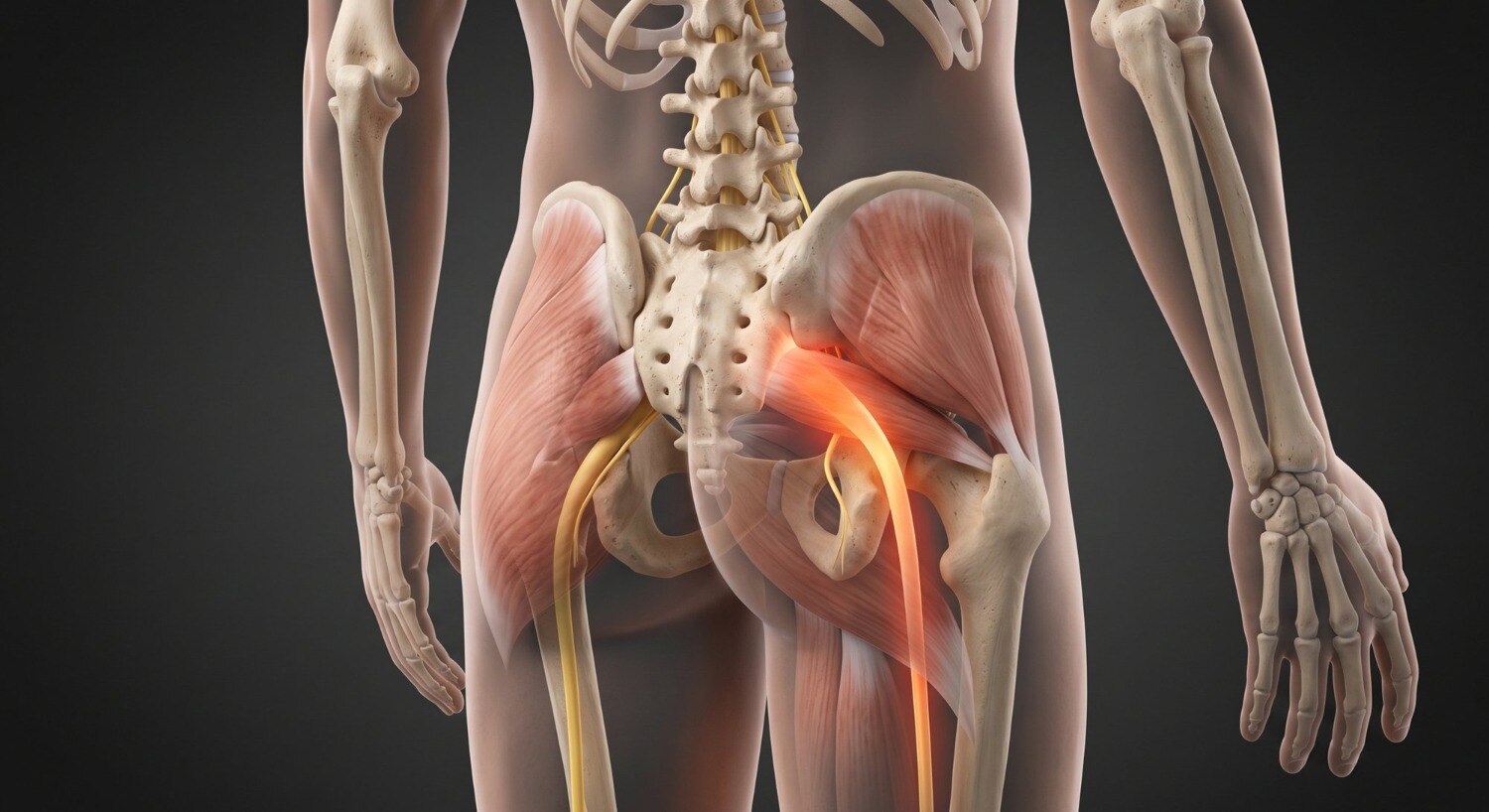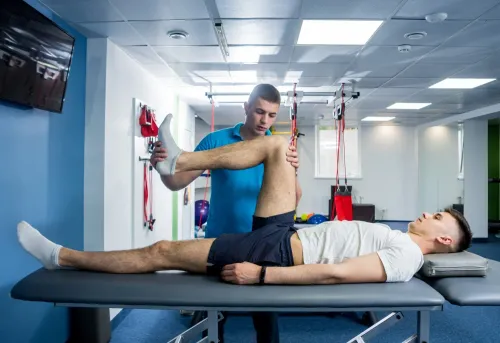

Stiffness from spinal degeneration is not treated well by choosing stretches at random. You need a programme that confirms the diagnosis, checks nerve function, matches movement to your symptoms, and measures progress through ordinary tasks such as turning your head, sitting, bending, and walking.
Key takeaways
- Spondylosis, spondylitis, and spondylolysis require different treatment plans.
- A physiotherapist tests movement, strength, sensation, balance, and nerve symptoms before exercise.
- Build flexibility with controlled mobility, strengthening, posture practice, and functional exercises.
- Stop and seek assessment for worsening weakness, numbness, balance loss, or bladder changes.
Spondylosis, spondylitis, and spondylolysis are not the same condition
“Spondilysis” is usually a misspelling or informal reference to spondylosis, the age-related wear affecting spinal discs, joints, and bone. Cervical spondylosis affects the neck; lumbar spondylosis affects the lower back. Neither term describes every source of stiffness.
Spondylolysis is different: it is a stress-related defect in the pars interarticularis, a small section of a vertebra. Spondylitis is different again and refers to inflammation of the spine, including conditions that can require medical management. Treating all three with the same flexibility routine can aggravate symptoms or delay the correct care.
Before starting a spondylosis physiotherapy flexibility treatment, ask the clinician to confirm what is causing your restricted movement:
- Review the pain pattern, injury history, stiffness duration, and triggers such as sitting, bending, or turning your head.
- Check spinal movement, hip and shoulder mobility, muscle strength, walking, balance, and nerve signs such as numbness, tingling, or limb weakness.
- Match the programme to the diagnosis and functional goal, then record how your symptoms respond over the next 24 hours.
The best physiotherapy for spondilysis flexibility in Pune is not defined by forceful stretching or promises to reverse osteophytes and disc degeneration. Choose an exercise-led plan with measurable goals, home practice, progression, pacing advice, and reassessment. Stop and seek medical review if exercise causes new limb symptoms, worsening weakness, or persistent pain.
How a physiotherapist tests flexibility and identifies the right starting point
The first appointment should establish what movement is limited, what triggers symptoms, and which activities matter to you. The physiotherapist observes posture and walking, then measures comfortable spinal movement rather than forcing your neck or back into a painful position.
- Neck and lower-back movement, including rotation, bending, and extension
- Hip and shoulder mobility, because restricted joints can increase spinal strain
- Muscle strength, coordination, sensation, and reflexes
- Pain, numbness, tingling, weakness, and the positions that change them
- Functional tasks such as turning your head, reaching overhead, sitting, bending, climbing stairs, or walking
If neck symptoms travel into an arm, the clinician checks hand strength, sensation, reflexes, gait, and balance. Clumsy hands, worsening balance, or progressive weakness require medical assessment rather than forceful stretching.
Your starting point comes from function, not an X-ray alone. A stiff back that still lets you work needs a different plan from pain that stops you standing for ten minutes. The clinician may record how far you walk, how long you sit, or how easily you reach a shelf as baseline measures.
A complete spondylosis physiotherapy flexibility treatment plan includes a home programme, pacing advice, work or household-position changes, and a clear progression rule. The therapist should schedule reassessment to adjust exercise difficulty and check whether movement, strength, and daily activity are improving. Passive treatment without documented functional goals offers little evidence of a complete rehabilitation plan.
Exercises and treatment methods that build useful everyday movement
Useful flexibility comes from moving comfortably, then controlling that range under load—not from forcing a stiff spine. A spondylosis physiotherapy flexibility treatment may use repeated neck or back movements, thoracic rotation, hip mobility, and hamstring or hip-flexor stretches selected after testing symptom triggers.
Add deep-neck, trunk, and hip strengthening, aerobic walking, and movement-control practice so reaching, turning, sitting, and climbing stairs become easier. Massage or manual therapy may settle pain briefly, but it should support, not replace, active rehabilitation.
- For neck stiffness, sit tall and turn your head slowly within a comfortable range, 5 to 8 repetitions each side. Do not push into arm pain, tingling, dizziness, or sharp pain.
- For lower-back mobility, lie on your back with knees bent and gently tilt your pelvis to flatten and release the lower back, 8 to 10 repetitions. Progress to a bridge when this remains comfortable.
- For restricted hips, use a supported half-kneeling hip-flexor stretch for 20 seconds on each side, twice. Keep the movement mild rather than forcing the pelvis forward.
- Repeat the home programme at a dose that settles within 24 hours. Reduce repetitions or change the exercise if pain, limb symptoms, or function remains worse the next day.
| Approach | Builds everyday movement by | Appropriate use |
|---|---|---|
| Active mobility | Restoring comfortable spinal and hip range | Stiffness linked to sitting or one movement direction |
| Strength and control | Holding range during lifting, walking, and stairs | Reduced endurance or confidence |
| Manual therapy | Providing short-term symptom relief | An adjunct when pain limits exercise |
| Work-position changes | Reducing repeated aggravating loads | Desk work, driving, or household tasks worsen symptoms |
How to adapt rehabilitation for neck, back, nerve, and balance symptoms
The programme should change according to the symptom pattern, not just the scan. Neck stiffness needs a different plan from lower-back stiffness, while arm or leg symptoms require neurological screening before flexibility is increased.
1. For neck symptoms, begin with comfortable cervical and upper-back movement, then add deep-neck and shoulder strengthening. Arm pain, numbness, or tingling requires checks of strength, sensation, reflexes, and walking. Clumsy hands, worsening balance, or progressive weakness require medical referral, not forceful neck exercises.
2. For lower-back symptoms, identify whether bending, arching, sitting, standing, or walking aggravates pain. Use the better-tolerated direction first, then build hip mobility, hamstring or hip-flexor flexibility, trunk strength, and loaded movement through a comfortable range.
3. If prolonged sitting triggers symptoms, use shorter sitting periods, lumbar support when helpful, and movement breaks before pain escalates. Do not treat a full workday in one exercise session.
4. If walking or leg symptoms are limited, start with measured walking intervals and add leg-strengthening and gait practice. Balance work should use supported standing, weight shifts, and stepping tasks, progressing only when control improves.
5. Judge each change by the next 24 hours. Mild temporary muscle discomfort can be acceptable; sustained pain, new limb symptoms, or reduced function means the dose, exercise, or diagnosis needs review. When comparing spondilysis rehabilitation in Pune, ask for a home plan, progression rule, and planned reassessment.
How to compare spondylosis rehabilitation in Pune and track safe progress
A good choice is the clinic that tests before treating, records a baseline, and explains how progress will be measured. When comparing spondylosis rehabilitation in pune, ask whether the clinician confirms spondylosis rather than assuming “spondilysis” means the same thing as spondylolysis or spondylitis.
| Criterion | What to check | Warning sign |
|---|---|---|
| Diagnosis | Neck or lower-back location, nerve symptoms, and relevant medical reports are reviewed | Treatment begins from the spelling alone |
| Safety screening | Strength, sensation, reflexes, gait, balance, and cord-related signs are checked | Forceful neck exercises are prescribed despite arm numbness |
| Progress plan | Functional goals, home exercises, pacing advice, and a reassessment date are written down | Repeated passive sessions have no progression rule |
For spondilysis physiotherapy vishrantwadi or another Pune area, compare the assessment and follow-up process, not promises of permanent flexibility or spinal “correction.” Dr Renukas Physiotherapy center is worth assessing by the same standard: ask how exercises will change your sitting, head turning, reaching, walking, or stair use, and when the plan will be reviewed.
Stop exercise and seek medical assessment before physiotherapy if you develop:
- New bladder or bowel control problems, saddle numbness, or severe limb weakness
- Progressive weakness, worsening balance, clumsy hands, or increasing difficulty walking
- Major trauma, fever, unexplained weight loss, or spinal pain with a cancer or infection history
Pain that spreads farther into an arm or leg, or new numbness, also needs prompt review rather than a harder stretch.
Frequently asked questions
Are spondylosis, spondylitis, and spondylolysis the same condition?
No. Spondylosis describes degenerative spinal changes, spondylitis describes inflammation, and spondylolysis describes a stress-related defect in part of a vertebra.
How does a physiotherapist assess flexibility before treatment?
The assessment can include spinal range of motion, muscle strength, walking, balance, sensation, reflexes, posture, and movements that reproduce symptoms.
Which physiotherapy methods help everyday movement with spondylosis?
A plan may combine gentle mobility exercises, strengthening, posture training, manual techniques, walking practice, and movements linked to daily tasks.
When do neck, back, nerve, or balance symptoms need a different rehabilitation plan?
Radiating pain, numbness, weakness, poor coordination, dizziness, or balance loss requires symptom-specific testing and exercise progression rather than a generic routine.
How can you compare spondylosis rehabilitation options in Pune?
Compare the initial assessment, individual exercise plan, progress measures, therapist communication, appointment access, and guidance for home practice.
Keywords