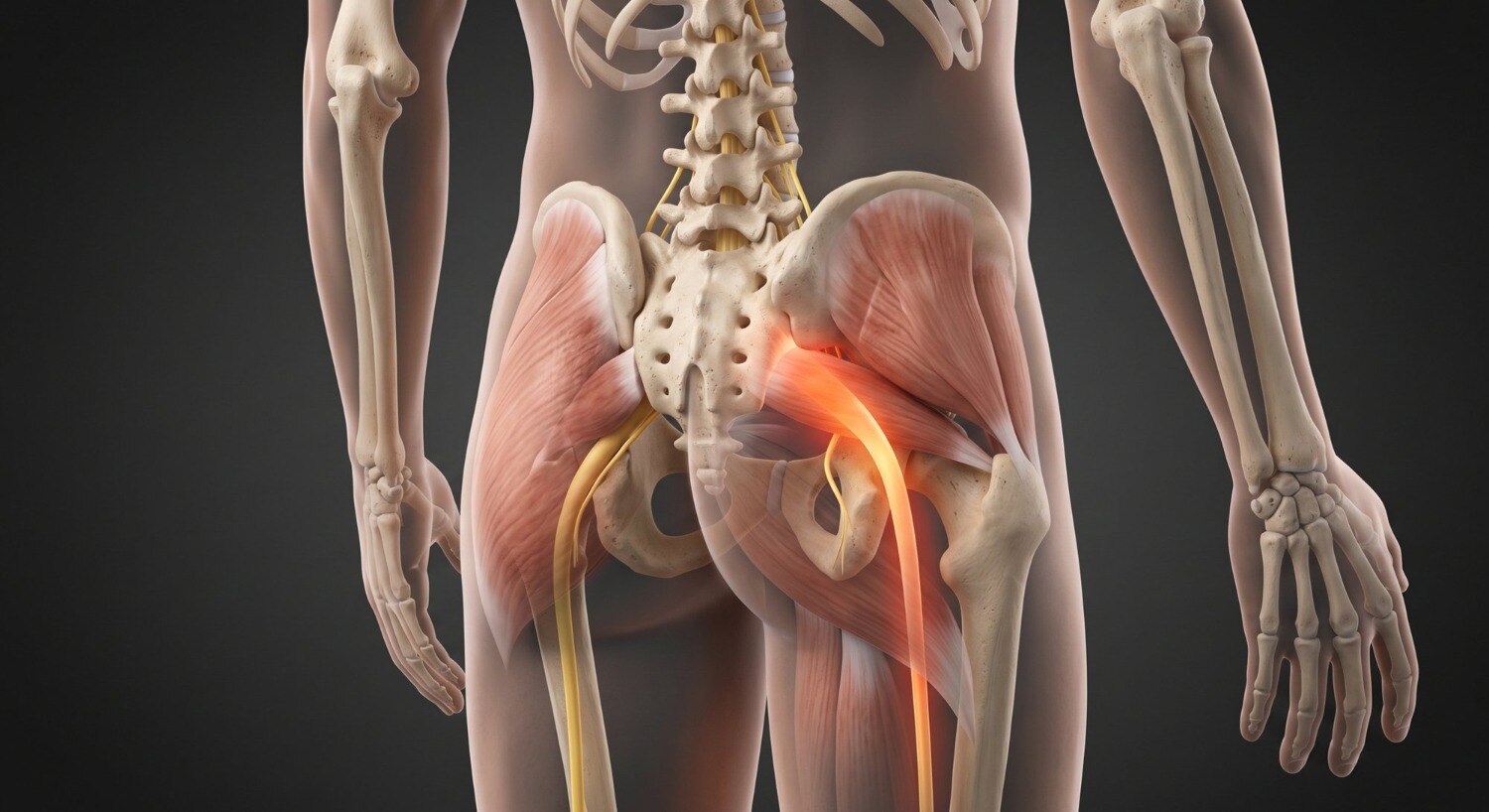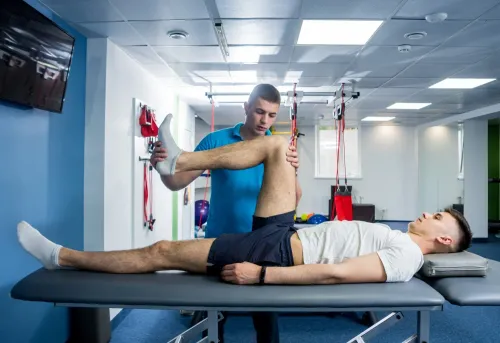

Pain that travels from the lower back into the buttock or leg can make a chair, a work counter, or a short walk feel unmanageable. The right plan starts by identifying whether spinal nerve irritation is actually causing the symptoms, then matches activity, exercise and referral decisions to your examination findings.
Key takeaways
- Sitting or standing difficulty alone does not confirm sciatica.
- Change positions before pain escalates and avoid repeated painful movements.
- A staged plan combines symptom control, movement retraining and progressive strengthening.
- Seek medical review for weakness, bladder changes or worsening unrelenting pain.
Does sitting or standing difficulty confirm that you have sciatica?
No. Difficulty sitting or standing does not confirm sciatica or show how serious the problem is. Sitting pain can rise when the lower back stays flexed, during driving, or when you rise from a chair. Standing pain can rise with prolonged loading, back extension, walking, or repeated transitions.
A physiotherapist should assess:
- Where pain travels: from the back to the buttock, thigh, calf or foot; and whether numbness, tingling or weakness follows it.
- What you can tolerate: walking time, sitting time and standing time, along with spinal and hip movement, gait, reflexes, sensation, muscle strength and nerve-tension signs.
- What else could explain it: hip arthritis, sacroiliac pain, hamstring injury, peripheral nerve compression and vascular symptoms. Choose exercises only after this examination.
Seek urgent medical assessment instead of routine physiotherapy for new bladder or bowel difficulty, inability to pass urine, saddle-area numbness, rapidly worsening weakness, severe weakness in both legs, fever, major trauma or unexplained weight loss. These symptoms can signal serious nerve or other medical problems.
This screening matters more than the label used in a search for sciatica treatment for standing difficulty. A treatment plan should match your examination findings, walking ability and neurological status, not simply the fact that sitting or standing hurts.
How can you sit, stand and move without repeatedly provoking leg pain?
Use a supportive setup and change position before leg pain builds; no single posture prevents every flare. Choose a chair that lets your feet rest flat, with your hips level with or slightly higher than your knees. Add a small lumbar roll only if it reduces symptoms.
Keep the screen near eye level and the keyboard close enough that you do not lean forward. Anyone seeking sciatica physiotherapy for sitting problems in Pune can apply these adjustments while working or studying.
1. During driving, move the seat close enough to keep a relaxed knee bend, support your lower back, and stop for brief walking breaks on longer journeys.
2. For sit-to-stand, move to the chair edge, place both feet under your knees, lean forward from the hips, and push through the armrests or thighs. Do not twist as you rise.
3. While standing, distribute your weight across both feet. Use a low footrest for brief alternating support, and set a work counter near elbow height.
Begin with short standing intervals and add brief walks. Increase the duration only when leg pain does not travel farther down the limb. These changes support activity without prescribing bed rest or aggressive stretching.
What does a staged physiotherapy plan for difficult sitting and standing include?
A staged plan starts by reducing irritability without stopping safe activity. Your physiotherapist identifies positions and movements that ease symptoms, sets tolerable sitting and walking limits, and tracks whether leg pain centralises toward the buttock or back. Pain travelling farther down the leg, increasing numbness or weakness, calls for reassessment.
- Early stage: use symptom-relieving positions and short, tolerable bouts of sitting and walking. Avoid forcing movements that sharply increase leg pain.
- Movement stage: restore lumbar and hip movement with controlled repetitions. Forcing end-range motion can keep an irritated nerve sensitive.
- Conditioning stage: add trunk and hip strengthening, repeated sit-to-stand practice, balance exercises and progressive walking as symptoms and movement improve.
- Nerve-mobility stage: use gentle neural mobilisation, also called nerve-gliding, only when radiating pain and examination findings indicate mechanosensitivity. It should not spread pain farther down the leg.
- Return stage: increase work, household and travel demands through planned exposure, such as adding a few minutes of standing or walking at a time.
Manual therapy can provide short-term comfort or make movement easier, but it belongs alongside exercise rather than replacing it. Measure progress by function—longer sitting, easier transfers or farther walking—not instant pain elimination. A plan for sciatica rehabilitation Vishrantwadi should name each exercise, frequency, symptom limits, reassessment dates and the activity goal being restored.
When should self-management give way to medication review, imaging or specialist care?
Self-management and graded physiotherapy suit uncomplicated symptoms when strength, sensation and daily function remain stable. Ask a doctor or pharmacist to review pain relief when symptoms stop you sleeping, walking or exercising; never change prescription medicines without medical advice.
Routine MRI is not needed simply to confirm sciatica. Consider imaging when severe or persistent symptoms require a specialist decision, especially when the result could change treatment. An epidural injection containing local anaesthetic and steroid is reserved for selected cases of acute, severe sciatica, not routine physiotherapy.
Persistent sciatic pain calls for a fresh review rather than repeated passive treatment. The review should cover the diagnosis, neurological findings, sleep, work demands, fear of movement, medication use and adherence to the activity plan. This applies when seeking physiotherapy for persistent sciatic pain in Pune or elsewhere.
Seek prompt reassessment if you notice:
- Increasing numbness, new weakness, pain travelling farther down the leg or declining walking ability.
- Severe disabling leg pain or objective weakness that continues despite conservative care; a spine or pain specialist may be appropriate.
- Failure of non-surgical care, matched imaging findings and a specialist assessment supporting spinal decompression.
Traction, routine ultrasound, TENS and acupuncture should not replace progressive rehabilitation. A clinic that offers them should explain their limits rather than present passive equipment as the best treatment.
How do you choose a physiotherapy service for sciatica in Pune?
A sound choice is a service that can explain its assessment and progression plan, not one selling a machine, a one-session promise or the word “best.” At the first visit, ask whether the therapist examines lumbar and hip movement, leg strength, reflexes, sensation, gait and nerve-tension signs, while screening for hip, sacroiliac, vascular and serious neurological causes.
Ask these questions before booking:
- What functional goal will we measure: walking distance, sitting time or sit-to-stand repetitions?
- Will you receive an individualized, graded home and clinic programme?
- How will the therapist adjust sitting and standing when symptoms increase?
- When is reassessment scheduled, and what change will count as progress?
- What happens if weakness progresses, red-flag symptoms appear or the diagnosis remains uncertain?
A clear referral pathway matters. The therapist should tell you when to seek medical or specialist assessment instead of repeating passive treatment.
| Service feature | Strong clinical sign | Warning sign |
|---|---|---|
| Assessment | Tests movement, strength, reflexes, sensation, gait and nerve tension | Begins treatment without examination |
| Programme | Progresses exercises against symptoms and functional goals | Relies mainly on equipment or passive care |
| Follow-up | Records walking or sit-to-stand change and reassesses | Promises rapid relief without review |
| Escalation | Explains referral for weakness, red flags or uncertainty | Has no answer when symptoms worsen |
People searching for best physiotherapy for sciatica sitting standing difficulty in Pune can use this checklist locally. Dr Renukas Physiotherapy center deserves the same test: match its assessment, exercise progression and escalation process to your symptoms and goals.
Frequently asked questions
Does difficulty sitting or standing confirm that you have sciatica?
No. Sitting or standing difficulty can result from several back, hip or nerve conditions. A clinical assessment must match your symptoms with strength, sensation, reflexes and movement findings.
How can you sit, stand and move without repeatedly provoking leg pain?
Change position regularly, use a supported sitting posture, take short walking breaks and practise controlled sit-to-stand movements. Stop exercises that cause spreading, worsening leg pain or new weakness.
What does a staged physiotherapy plan for difficult sitting and standing include?
Treatment commonly progresses from symptom-guided positioning and gentle movement to movement retraining, trunk and hip strengthening, walking practice and a graded return to daily activities.
When should self-management give way to medication review, imaging or specialist care?
Seek urgent care for new bladder or bowel loss, saddle numbness or rapidly worsening weakness. Arrange medical review when pain persists, limits sleep or function, or fails to improve with a structured plan.
How do you choose a physiotherapy service for sciatica in Pune?
Choose a clinic that performs a neurological and movement assessment, explains the working diagnosis, sets measurable goals and reviews your response instead of relying on passive treatment alone.
Keywords