Pins-and-needles, reduced sensation, burning, and weakness point to a different assessment pathway than ordinary muscular backache. You will learn how to recognise urgent warning signs, what a proper neurological examination includes, and how to judge whether a physiotherapy plan is safe, active, and improving your function.
Key takeaways
- Numbness suggests altered nerve function but does not prove disc compression.
- Seek urgent assessment for new bladder or bowel problems, saddle numbness, or worsening leg weakness.
- Ask for a neurological examination before starting exercises or deciding on an MRI.
- Choose physiotherapy that combines symptom monitoring, graded exercise, and clear referral criteria.
What do numbness and tingling indicate?
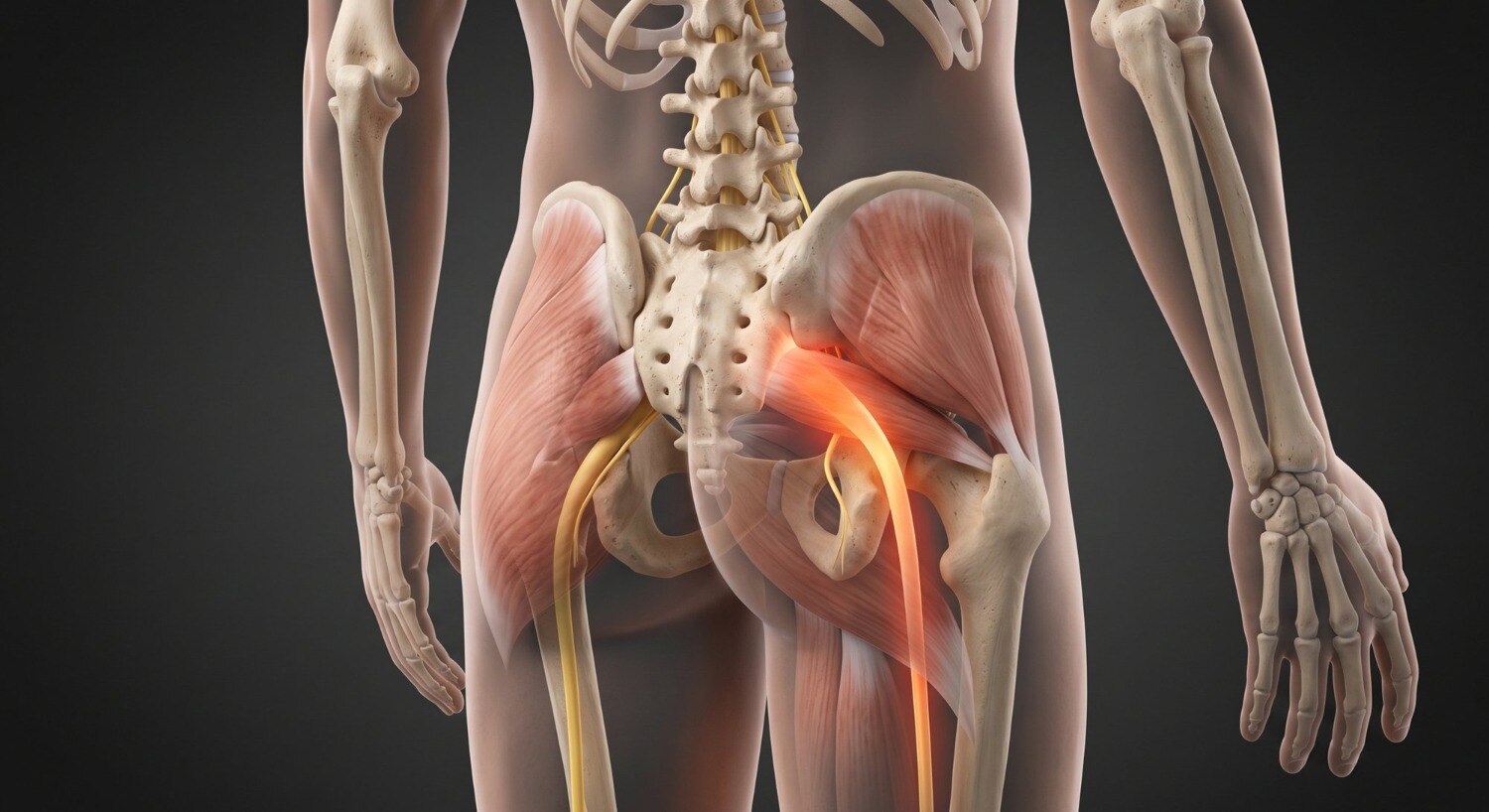
Numbness or tingling suggests altered nerve function, but it does not prove that a disc is compressing a nerve. Muscle strain usually causes local aching and tenderness; joint pain stays near the spine or pelvis; referred pain spreads without consistent sensory loss or weakness.
| Symptom pattern | What it can indicate | Useful clues |
|---|---|---|
| Pins-and-needles | Irritated or sensitised nerve tissue | Buzzing or prickling that follows a repeatable path |
| Burning pain | Nerve-related pain or heightened nerve sensitivity | Electric, hot, or shooting quality |
| Reduced sensation | Impaired sensory nerve function | An area feels dull when touched or compared with the other side |
| Weakness | Motor nerve involvement, pain inhibition, or muscle problem | Trouble lifting the foot, extending the knee, or rising onto the toes |
Where symptoms travel matters. Leg symptoms, especially below the knee, deserve closer neurological assessment than pain confined to the lower back. Note which positions aggravate them, how far you can walk, whether sitting or bending changes them, and whether the pattern is stable, improving, or spreading.
Lumbar radicular pain is pain arising from an irritated lumbar nerve root. Radiculopathy means nerve-root dysfunction demonstrated by findings such as reduced sensation, weakness, or altered reflexes. Symptoms alone confirm neither diagnosis.
Objective or progressive weakness is more concerning than stable tingling because it can reflect declining motor function. Pain intensity alone does not decide whether physiotherapy is appropriate; examination findings, functional loss, symptom progression, and safety concerns do. A careful assessment guides physiotherapy for nerve related back symptoms without assuming one cause.
Which symptoms require urgent medical assessment?
New bladder or bowel changes, numbness around the groin or inner thighs, or severe or progressive weakness in both legs require emergency medical assessment. These signs can indicate cauda equina syndrome or another serious compression, and routine physiotherapy must not delay examination.
| Symptom pattern | Action | Why it matters |
|---|---|---|
| New bladder or bowel difficulty, saddle-area numbness, or severe weakness in both legs | Seek emergency care now | Possible cauda equina or serious nerve compression |
| Foot drop, rapidly worsening numbness, weakness, or walking difficulty | Obtain urgent medical assessment | New functional loss needs neurological review |
| Fever, major trauma, or unexplained weight loss with back symptoms | Arrange prompt medical review | Infection, fracture, or another serious condition requires exclusion |
| Stable pins-and-needles that are improving, without weakness or functional loss | Book a planned assessment | Symptoms can be assessed without treating them as an emergency |
Do not use pain intensity as your triage test. New weakness, increasing leg weakness, or loss of walking, balance, or daily function warrants review even when pain is modest.
If you are searching for back pain with tingling physiotherapy in Pune, treat that phrase as a symptom-and-location search, not a diagnosis. A clinician should reassess your neurological status if symptoms worsen, fail to improve, or spread; stable, improving tingling can proceed through a planned appointment.
What happens at the first assessment, and when is an MRI needed?
A competent first assessment records your symptoms and tests whether a nerve is affected, rather than treating numbness as ordinary muscle strain. It should also identify changes that require a physician or specialist instead of routine physiotherapy.
- Ask where symptoms began, when they started, whether pain is mainly in the back or leg, and whether tingling, reduced sensation, burning, or weakness is spreading.
- Record positions that aggravate symptoms, walking tolerance, sleep and work limits, symptom progression, previous episodes, medical conditions, medicines, trauma, and relevant medical history.
- Examine spinal movement, posture, gait, and functional tasks such as walking on heels or toes.
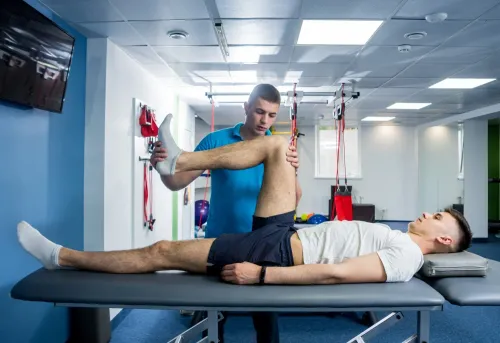
- Test key muscle groups through myotomes, skin sensation through dermatomes, and tendon reflexes. Use a straight-leg raise or another neural provocation test when the findings make it clinically appropriate.
- Explain the findings, set a reassessment plan, and state when to seek medical care. Progressive weakness, foot drop, worsening function, or an unclear diagnosis warrants physician or specialist referral.
MRI is not automatic for every episode. Disc bulges and degenerative changes are common in people without symptoms, so an incidental scan can increase worry without changing treatment. Specialist imaging is most useful when the result is likely to alter management, such as deciding on a procedure or investigating a persistent neurological deficit.
Use this checklist to judge a back pain assessment clinic in Pune: documented neurological testing, clear referral thresholds, and follow-up based on function and neurological status.
What should effective physiotherapy include, and what should you avoid?
A good plan follows examination findings, not a fixed machine-based package. It combines education about symptoms with temporary modification of aggravating tasks, pacing, walking, graded strengthening, trunk or general conditioning, and movement retraining. Neural mobility belongs only when examination findings support it.
Avoid making these the default treatment:
- Traction, routine TENS, or acupuncture as the main intervention
- Prolonged bed rest or waiting for every tingling sensation to disappear
- Aggressive stretching, forceful spinal manipulation, or repeated painful movements
- Self-prescribed exercises that increase tingling, numbness, weakness, or leg symptoms
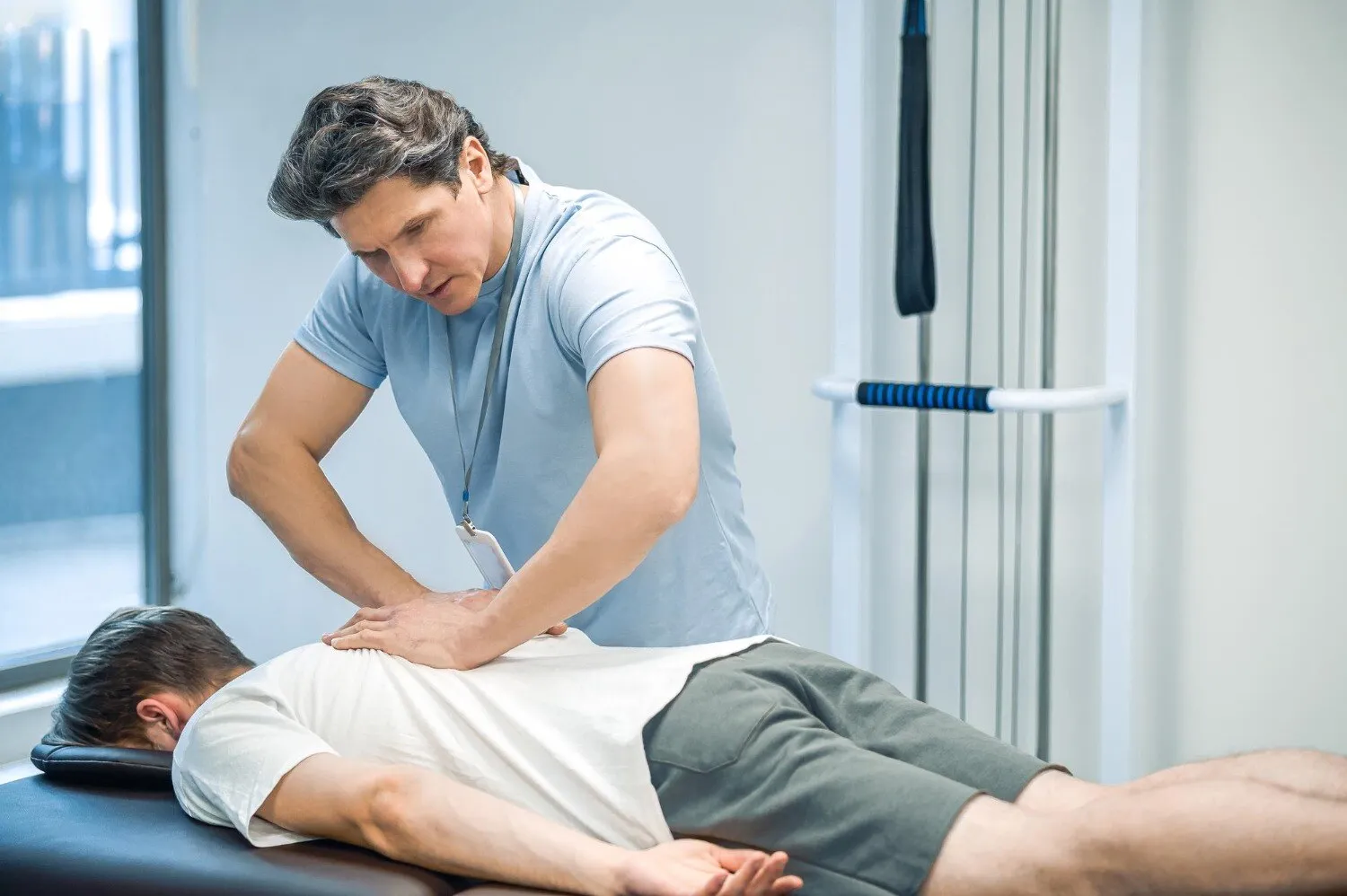
Manual therapy, including mobilisation or soft-tissue work, can provide short-term support, but it should sit alongside an active exercise programme. Used alone, it does not build the strength, walking tolerance, or movement confidence needed for lasting recovery.
A useful session includes a review of symptom location, intensity, distribution, function, and neurological status, followed by practical treatment rather than passive modalities alone. You should leave with specific home exercises, guidance on walking and daily tasks, a treatment-frequency plan, and clear instructions about which changes require contact with the clinic.
Progression should follow function and neurological findings: longer walking, improved strength, easier work or household tasks, and reduced symptom spread. New weakness, worsening tingling, or declining function requires reassessment and possible medical referral, not automatic repetition of the same programme.
How do you compare physiotherapy options in Pune or Vishrantwadi?
A “best” provider is one whose assessment and follow-up you can check, not one promoting a particular machine or branded protocol. Ask whether the physiotherapist records strength, sensation, reflexes, gait, symptom trend, and limits on walking, sleeping, working, or daily tasks.
| Provider check | Strong answer | Warning sign |
|---|---|---|
| Neurological assessment | Documents myotomes, dermatomes, reflexes, gait, and relevant neural tests | Records only pain intensity |
| Referral plan | Explains when new weakness, worsening function, or red flags need medical review | Promises physiotherapy will solve every case |
| Treatment plan | Gives active exercises, walking or pacing guidance, and a progression schedule | Repeats passive treatment without measurable goals |
| Reassessment | Sets a review date and changes the plan from your response | Continues the same package automatically |
A useful review tracks walking tolerance, sleep, work and daily activity, leg strength, symptom distribution, and whether you rely less on cushions, braces, rest, or other modifications. Stable tingling with improving function is different from spreading numbness, increasing weakness, or declining mobility.
If you are comparing options for back pain numbness treatment Vishrantwadi, ask Dr Renukas Physiotherapy center these questions and compare the answers with other providers. The search phrase best physiotherapy for back pain numbness tingling in Pune describes a symptom-and-location search, not proof that one treatment suits everyone.
Choose the provider who measures change and explains what happens if you do not improve.
Frequently asked questions
What can numbness or tingling indicate with back pain?
Numbness or tingling indicates altered nerve function, but it does not prove that a disc is compressing a nerve. Muscle strain usually causes local aching and tenderness, while joint pain stays near the spine or pelvis.
Which back-pain symptoms require urgent medical assessment?
Seek urgent assessment for new bladder or bowel problems, numbness around the inner thighs or genitals, rapidly worsening leg weakness, or severe symptoms in both legs.
When is an MRI needed for back pain with tingling?
A clinician decides on MRI after reviewing your history and neurological examination. Imaging becomes more important when there is progressive weakness, serious warning signs, or symptoms that persist despite appropriate care.
What should effective physiotherapy for nerve-related back symptoms include?
Effective care includes a neurological assessment, symptom monitoring, graded movement and strengthening, education about activity, and referral when symptoms worsen or do not follow the expected pattern.
How can you compare physiotherapy options in Pune or Vishrantwadi?
Compare the clinician's assessment process, experience with nerve-related symptoms, exercise follow-up, communication about MRI and referral decisions, accessibility, and whether the plan is adapted to your findings.
Keywords